MOFCOM pushes back the November 10 deadline by 60 days following bilateral diplomatic talks, but heavy rare-earth shipments to Western buyers remain tightly throttled.
With less than seven weeks until DFARS 252.225-7052 takes full effect, defense contractors lobby for transitional waivers as Western heavy rare-earth metallization lags.
Bottlenecked export licensing splits the global critical mineral market in two, forcing Western robotics, EV, and laser manufacturers to pay steep CIF North America premiums.
America’s flagship rare-earth producer scales separated neodymium-praseodymium output at Mountain Pass and ramps finished magnet production at its Fort Worth facility.
More than three years after Beijing first imposed export licenses on gallium and germanium, Western GaN power electronics and infrared optics makers face thinning buffer inventories.
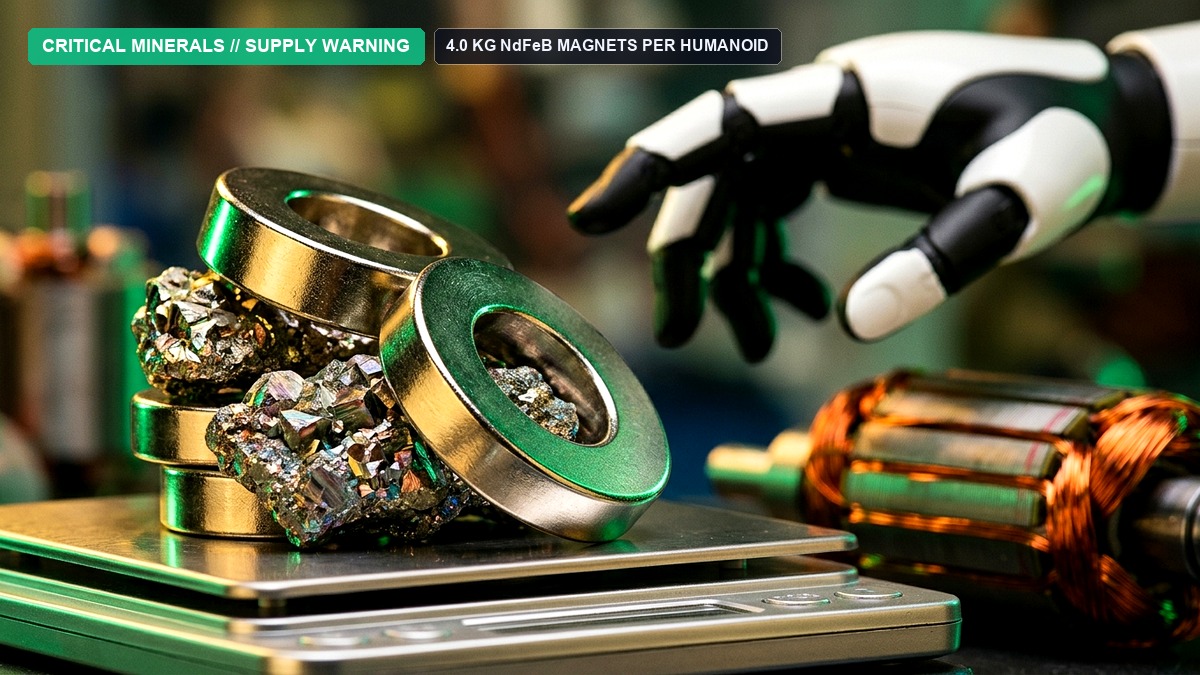
New commodity analysis from Argus Media reveals that each bipedal humanoid robot requires 3.5kg to 4.2kg of heavy-rare-earth-doped permanent magnets, threatening a severe global dysprosium and terbium shortage by late 2027.
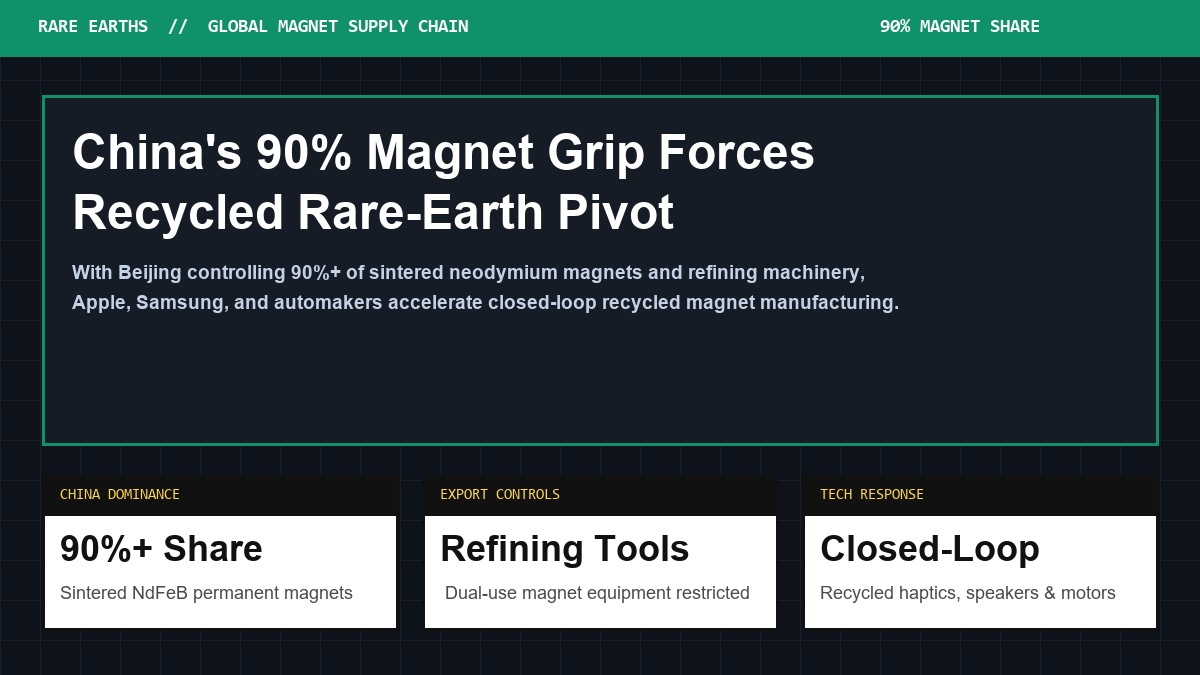
As China maintains a 90%+ grip on global sintered rare-earth magnet production and tightens export licenses on processing machinery, Apple, Samsung, and Tesla are accelerating closed-loop recycled magnet supply chains.
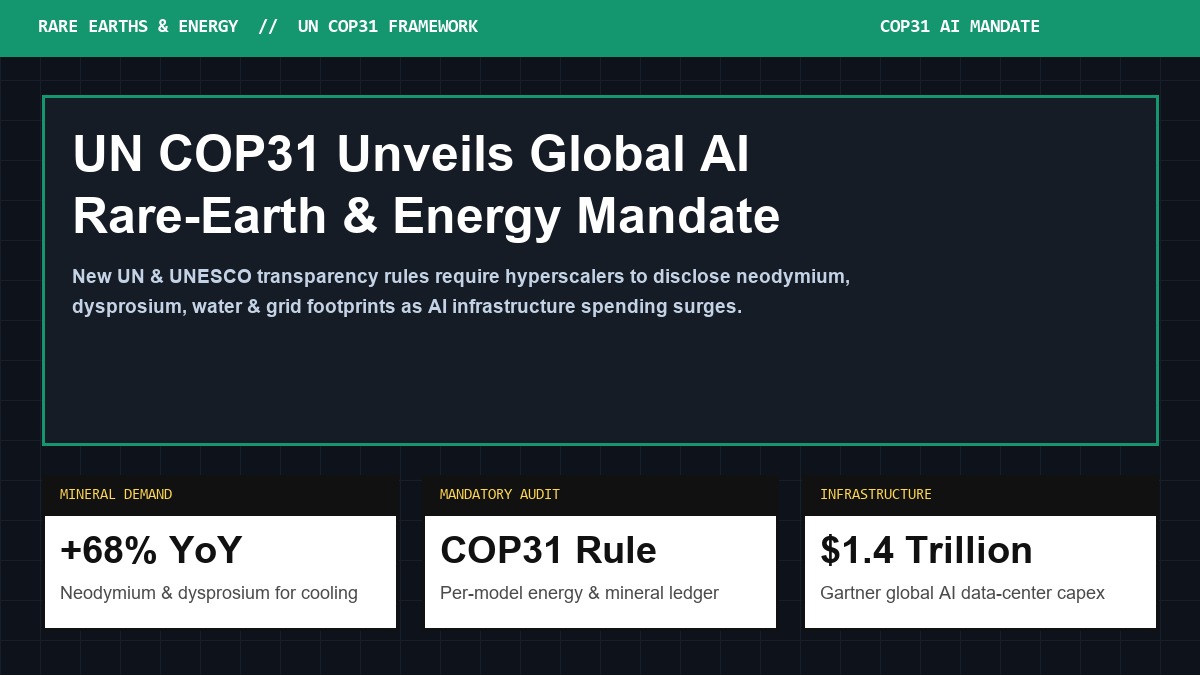
At the COP31 climate summit, the UN and UNESCO unveiled global transparency standards requiring AI hyperscalers to disclose data-center energy draw and rare-earth mineral consumption.
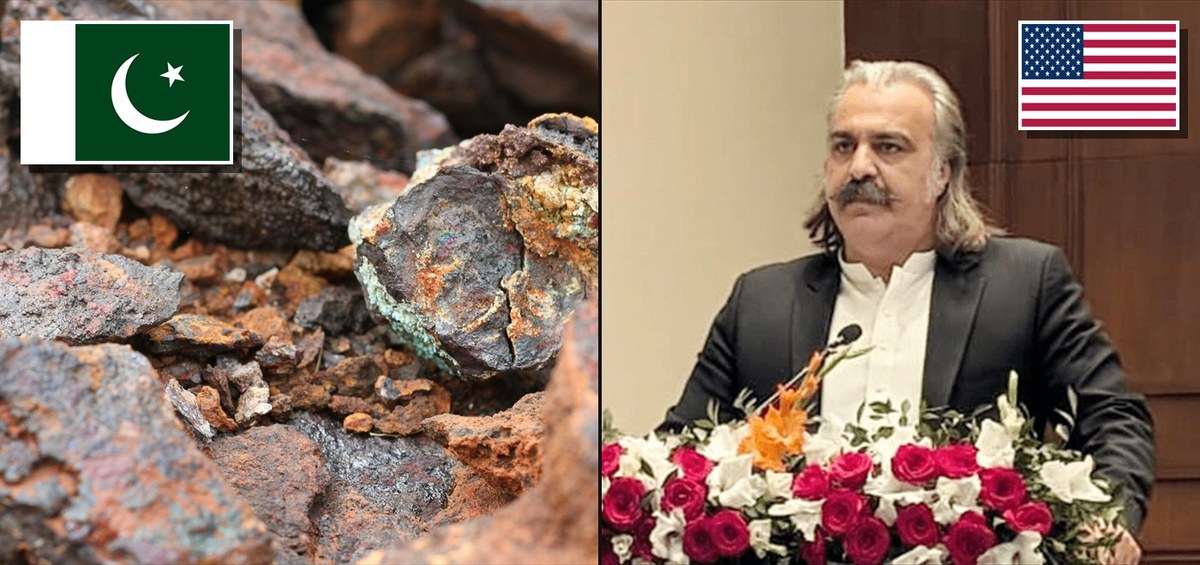
Washington is moving aggressively to secure access to Pakistan's untapped rare-earth and critical mineral wealth in Khyber Pakhtunkhwa (KPK) and Balochistan. Under a landmark $500 million framework between Pakistan's Frontier Works Organization (FWO) and Missouri-based U.S. Strategic Metals (USSM), initial consignments of neodymium, praseodymium, antimony, and copper concentrates have already been dispatched to the United States amid intense geopolitical competition and domestic debate over the KP Mines and Minerals Bill.
Despite Beijing’s temporary mineral waiver rollover to January 2027, wide price gaps between European and Chinese rare earth oxides are pushing semiconductor foundries to redesign factory motors.
On the November 10 deadline, Beijing rolled over temporary mineral waivers for two months but unveiled draft export controls targeting large AI model training and 2.5D/3D chip design.
A US-China truce runs to January, but the legal pauses on key rare-earth and battery-material controls expire this month unless both sides extend them.
What's next in AI.
The daily briefing on AI news, tools and breakthroughs — from every corner of the world.