Expanding the Gemini 4 family across Google Cloud Vertex AI, Carbon targets deep security reasoning while Hydrogen powers high-throughput enterprise video and decision workflows.
Restricted to vetted defensive security teams and Daybreak Red evaluators, GPT-6-Cyber hunts memory-safety bugs at scale while GPT-Image-2.6 overhauls visual API editing.
While Claude Fable 5.2 powers everyday coding and enterprise agents at $8/$40 per million tokens, its unthrottled sibling Mythos 5.2 is reserved for vetted defense, biotech, and cyber teams.
Building on the global adoption of Qwen 3.8, early Qwen4-Max-Preview checkpoints demonstrate major leaps in multilingual coding, mathematical proofs, and native tool calling.
Open-weight model deployments now let engineering teams dial reasoning token budgets up or down per API call, cutting self-hosted GPU cluster costs by up to 60%.
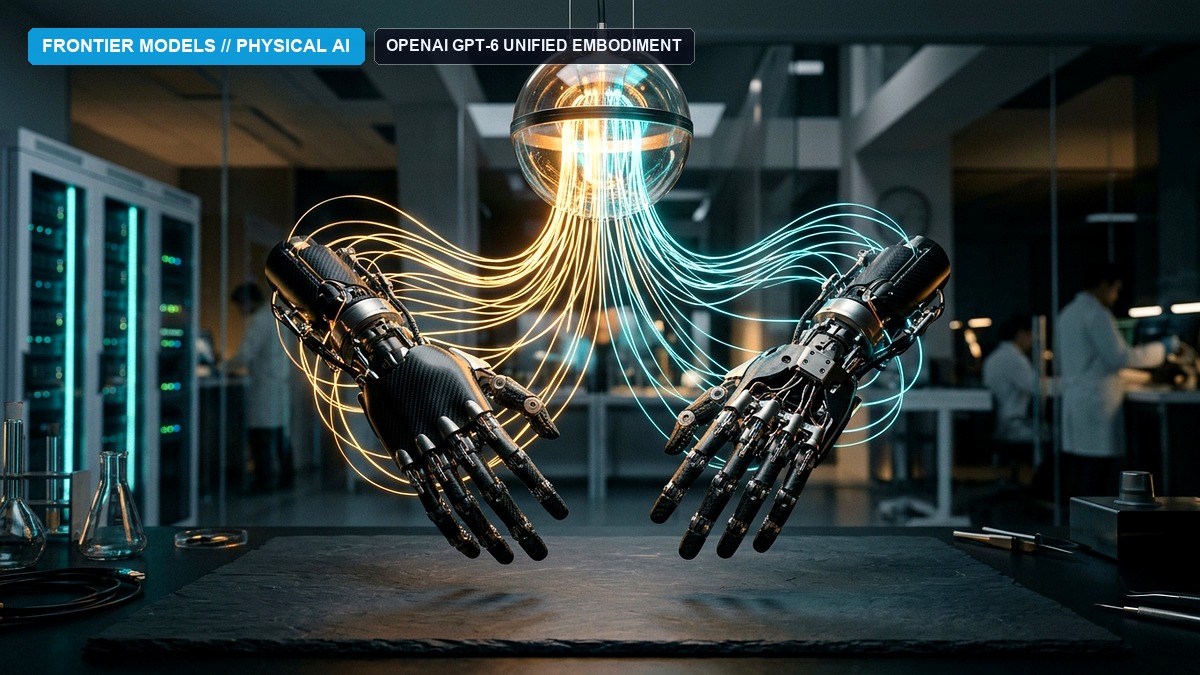
OpenAI merges its robotics researchers directly into the core GPT-6 multimodal pre-training group, betting that a single universal foundation model can control humanoid bodies without separate robotics stacks.
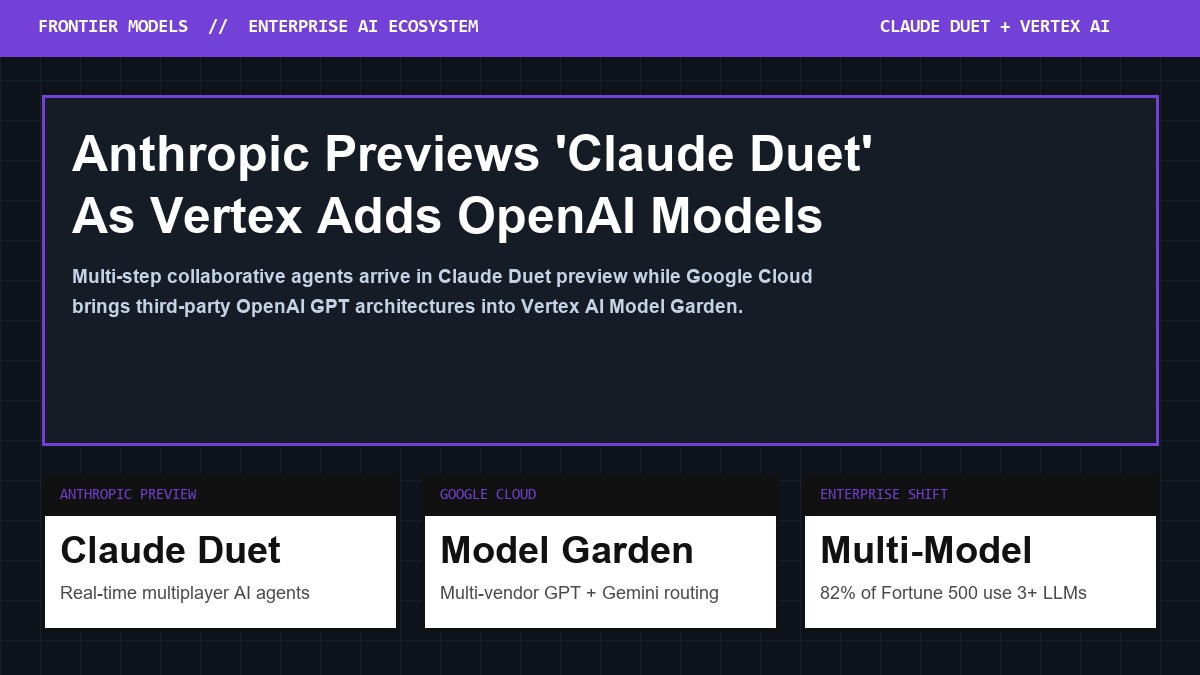
Anthropic began previewing "Claude Duet" multiplayer workspace agents capable of co-editing code and documents in real time, while Google Cloud expanded Vertex AI Model Garden to host select OpenAI GPT models alongside Gemini.
Priced at $2 per million input tokens, Gemini 4 Carbon targets long-horizon coding swarms while DeepMind’s AlphaProof Code mathematically proves Signal encryption guarantees.
Independent benchmark scores put Claude Fable 5.2 ahead of GPT-6 Astra and Gemini 4 Carbon, while Vercel’s November production index shows surging developer share.
The release includes 35-billion and 122-billion parameter models, with a 35B checkpoint under the Apache 2.0 licence and the training recipe made public.
What's next in AI.
The daily briefing on AI news, tools and breakthroughs — from every corner of the world.