Why China still controls over 90% of sintered rare-earth magnets
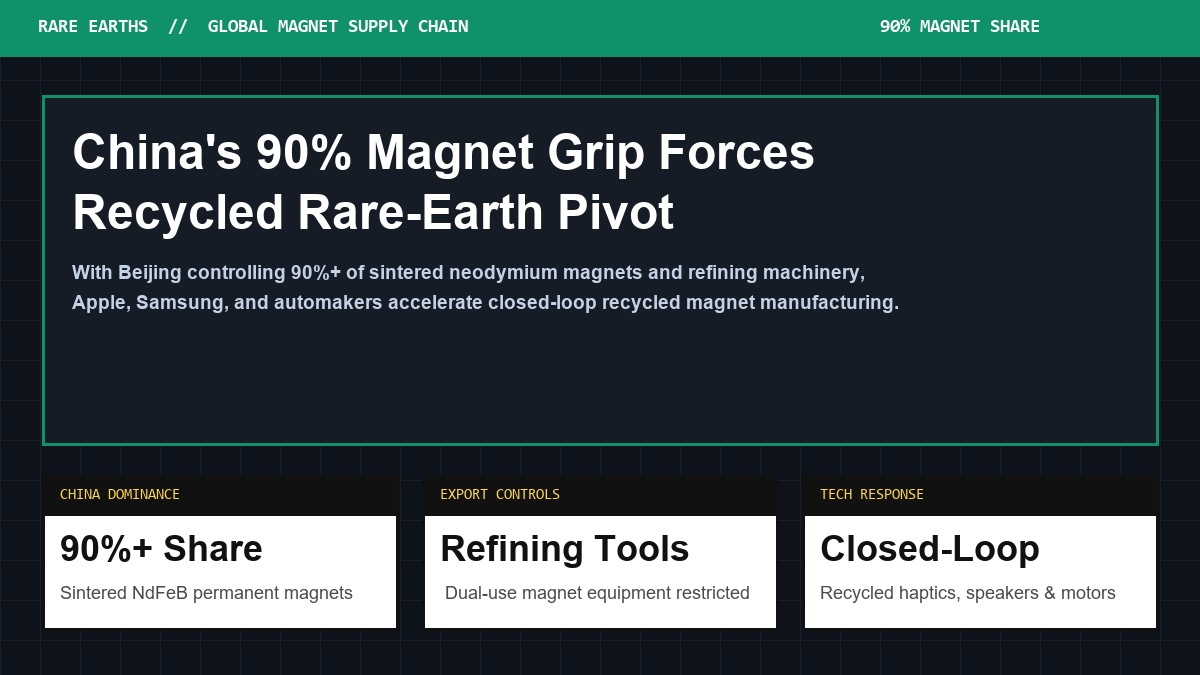
While Western governments have poured billions into upstream rare-earth mining projects over the past two years, industry data published this week by Rare Earth Exchanges and EU trade analysts underscores a stark reality: mainland Chinese refiners still account for more than 90% of finished sintered neodymium-iron-boron (NdFeB) permanent magnets and virtually all heavy rare-earth dysprosium separation.
How Apple and Samsung are using closed-loop recycled magnets as a shield
Because every flagship smartphone relies on precision rare-earth magnets inside its haptic engine, MagSafe/Qi2 charging array, camera optical image stabilization (OIS) actuators, and stereo speakers, both Apple and Samsung have aggressively ramped closed-loop magnet recycling. Apple’s multi-year offtake partnership with MP Materials’ Fort Worth magnetics facility and Samsung’s certified recycled rare-earth program are now supplying a majority of acoustic and haptic magnets in late-2026 flagship devices.
- China controls upwards of 90% of global sintered rare-earth permanent magnet production.
- Apple (via MP Materials) and Samsung have expanded certified recycled rare-earth magnets in late-2026 flagship smartphones.
- Whether Western magnet sintering capacity can reach 25% of domestic tech and defense demand before 2029.
- ✓Sources: written from primary sources and official statements, linked above.
- ✓Fact-check: names, dates and claims checked against the original sources.
- ✓AI use: researched with AI tools; written and reviewed by our editors. Our AI policy
- ✓Independence: UpdateNext has no financial relationship with the companies covered.