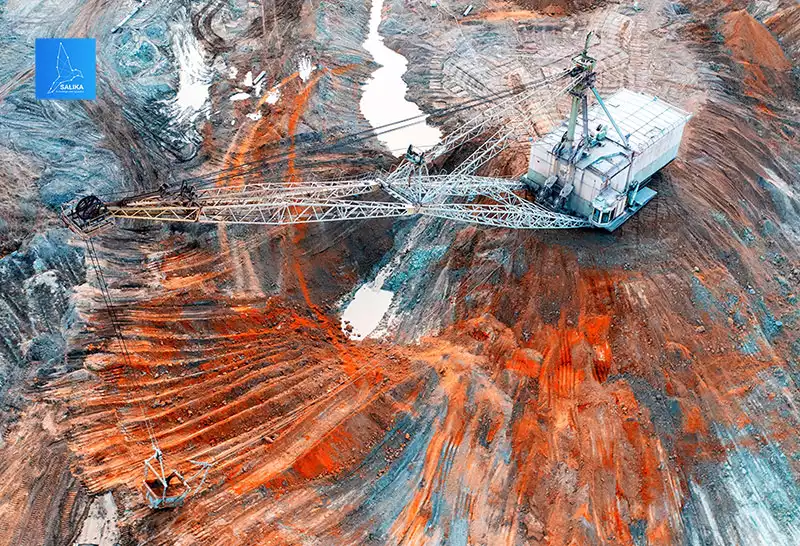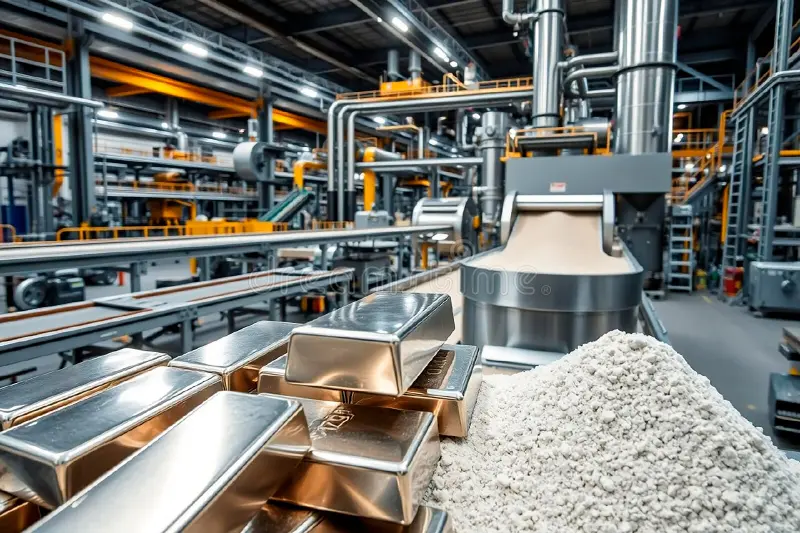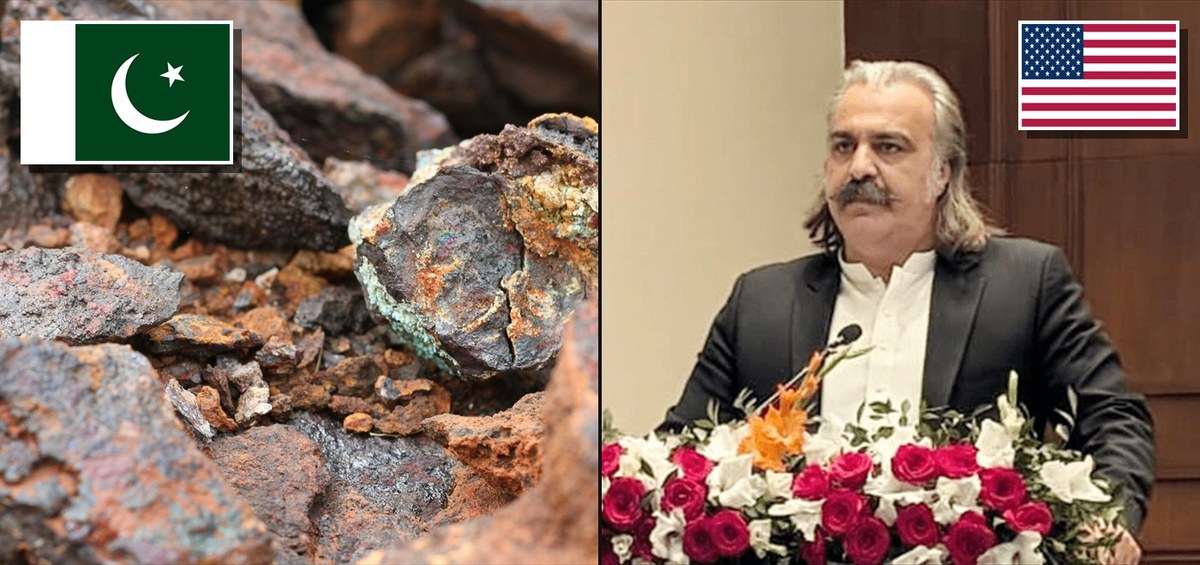
🇵🇰 As Beijing tightens export controls over the rare-earth permanent magnets and heavy oxides that power American fighter jets, AI data-center robotics, and precision-guided munitions, Washington has turned its sights toward one of the world's largest untapped geological frontiers: Pakistan's mountainous province of Khyber Pakhtunkhwa (KPK) and neighboring Balochistan.
Under a landmark $500 million partnership signed between Pakistan's military-backed Frontier Works Organization (FWO) and Missouri-based U.S. Strategic Metals (USSM), American metallurgists and defense supply-chain planners are racing to secure long-term offtake agreements for Pakistani neodymium, praseodymium, antimony, tungsten, and copper concentrates. Following the signing at the Prime Minister's House in Islamabad—witnessed by senior US diplomatic officials including Chargé d'Affaires Natalie A. Baker—Pakistan dispatched its first-ever trial consignments of enriched rare-earth and critical mineral concentrates directly to the United States.

Why Washington wants Khyber Pakhtunkhwa (KPK) minerals so badly
The Pentagon and the US Department of Energy face a strict statutory deadline banning Chinese-sourced rare-earth magnets and defense metals from American weapons platforms and AI hardware supply chains. Khyber Pakhtunkhwa—spanning the Hindu Kush and Karakoram mountain belts across Chitral, Kohistan, Swat, Mohmand, and the merged tribal districts of North and South Waziristan—sits atop complex tectonic zones rich in exactly the strategic elements the United States lacks domestically:
• Antimony in Chitral and KPK: Essential for armor-piercing ammunition, night-vision semiconductors, flame retardants, and grid-scale liquid-metal batteries. Chitral has long hosted some of South Asia’s highest-grade stibnite (antimony sulfide) veins. • Neodymium and Praseodymium (NdPr): Light rare-earth elements identified across carbonatite complexes in KPK (including Sillai Patti in Malakand and Loe Shilman near the Khyber district), vital for high-torque permanent magnets inside electric-vehicle motors, drone actuators, and AI data-center cooling turbines. • Copper, Chromite, and Tungsten: Found extensively across North and South Waziristan, Mohmand, and Bajaur, where FWO geological teams have expanded exploration blocks.
The KP Mines and Minerals Bill and the battle over provincial control
The intensity of American and foreign interest in KPK's underground wealth has sparked a high-stakes political showdown inside Pakistan. Throughout 2025 and 2026, the proposed KP Mines and Minerals Bill drew heated debate in the Khyber Pakhtunkhwa Provincial Assembly. Schedule-I of the legislation specifically classifies 'strategic minerals' and 'rare-earth elements' under specialized regulatory oversight, establishing a digitized licensing cadastre and a Mineral Investment Facilitation Authority.
Local lawmakers, tribal elders in the merged districts of Waziristan, and provincial political leaders argued that under Pakistan's 18th Constitutional Amendment, natural resources located within Khyber Pakhtunkhwa belong strictly to the province and its local communities. Tensions escalated further in late 2026 following federal interventions in KPK days after high-profile US diplomatic meetings in Islamabad focused on accelerating foreign mining concessions and establishing secure transport corridors through the National Logistics Corporation (NLC).
US vs. China: A delicate geopolitical balancing act
Pakistan's rare-earth push has placed Islamabad and Peshawar at the center of a tug-of-war between Washington and Beijing. While USSM plans to construct a flexible poly-metallic refinery in Pakistan to process KPK and Balochistan ores for Western aerospace and tech buyers, Chinese state mining firms have simultaneously courted KPK provincial authorities for mineral processing zones linked to the China-Pakistan Economic Corridor (CPEC). How Pakistan balances local provincial rights in KPK with competing US and Chinese critical-mineral deals will shape the global rare-earth supply chain for the remainder of the decade.
- The United States has signed a landmark $500 million critical minerals framework with Pakistan through Missouri-based U.S. Strategic Metals (USSM) and the Frontier Works Organization (FWO) to counter Chinese rare-earth dominance.
- Geological surveys across Khyber Pakhtunkhwa (KPK)—including North and South Waziristan, Chitral, Kohistan, and Mohmand—highlight rich deposits of rare-earth elements (neodymium and praseodymium), antimony, tungsten, copper, and lithium-bearing pegmatites.
- Pakistan has already dispatched its first historic batches of rare-earth concentrates, antimony, and copper to US processing facilities while plans advance for a domestic poly-metallic refinery.
- American urgency over KPK’s mineral wealth has ignited fierce political debate in Peshawar and Islamabad over the KP Mines and Minerals Bill, provincial autonomy under the 18th Amendment, and federal security corridors.
“For Washington, unlocking Pakistan’s frontier mineral belt in Khyber Pakhtunkhwa and Balochistan is no longer just a commercial mining play—it is an urgent national-security hedge against China’s 90 percent monopoly over refined rare earths and antimony.”— South Asia Critical Minerals & Defense Supply Chain Briefing, November 2026
- ✓Sources: written from primary sources and official statements, linked above.
- ✓Fact-check: names, dates and claims checked against the original sources.
- ✓AI use: researched with AI tools; written and reviewed by our editors. Our AI policy
- ✓Independence: UpdateNext has no financial relationship with the companies covered.