Inside the Tesla–SpaceX "Terafab" talks with Japanese chip toolmakers
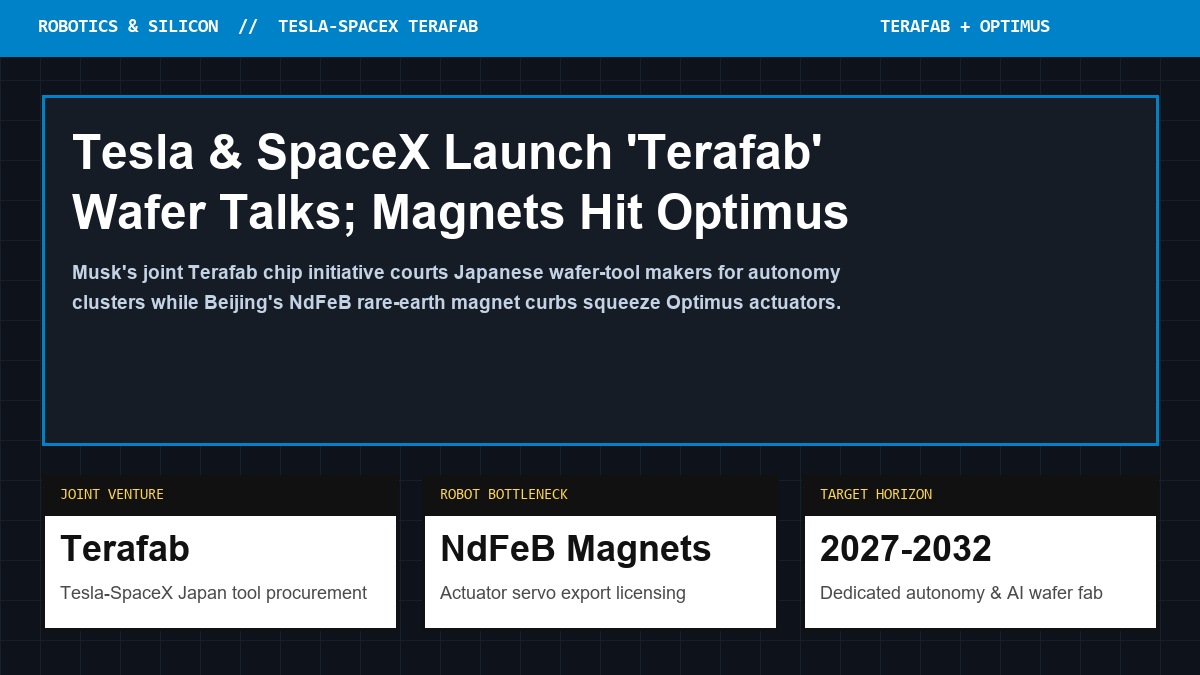
Supply-chain reports out of Tokyo today revealed that engineers and procurement executives representing Elon Musk’s joint Tesla–SpaceX "Terafab" semiconductor initiative have held formal negotiations with top Japanese semiconductor equipment suppliers. Rather than relying exclusively on congested TSMC and Samsung foundry queues through the 2030s, the Terafab roadmap envisions dedicated high-throughput wafer lines tailored specifically for Full Self-Driving (FSD), Optimus neural controllers, and SpaceX satellite silicon.
How rare-earth magnet export curbs are pressuring Tesla Optimus actuators
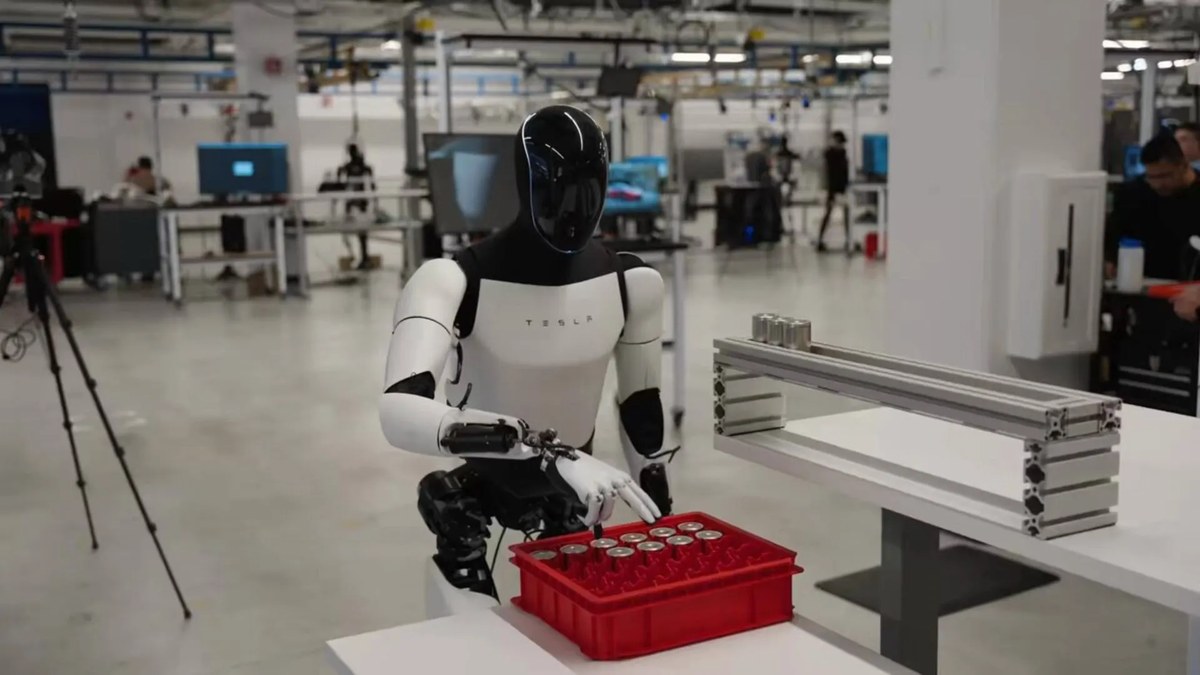
While Terafab targets long-term silicon independence, Tesla’s Gen 3 Optimus humanoid program is navigating an immediate materials bottleneck: each humanoid robot requires dozens of compact, high-torque rotary and linear actuators packed with heat-resistant dysprosium-doped neodymium (NdFeB) magnets. Tightened Beijing export-licensing inspections on dual-use permanent magnets have lengthened customs clearance times, accelerating Tesla’s push into alternative motor topologies and non-Chinese magnet refining.
- The joint Tesla–SpaceX "Terafab" initiative has opened equipment procurement discussions with Japanese wafer toolmakers.
- Tightening Chinese rare-earth magnet export licenses have created supply-chain friction for humanoid robotic actuators.
- Where Tesla and SpaceX plan to break ground on the first physical Terafab campus.
- ✓Sources: written from primary sources and official statements, linked above.
- ✓Fact-check: names, dates and claims checked against the original sources.
- ✓AI use: researched with AI tools; written and reviewed by our editors. Our AI policy
- ✓Independence: UpdateNext has no financial relationship with the companies covered.